Golf real estate has grown from a niche lifestyle category into one of the most searched-for segments of the global property market. Buyers in the United States, the United Kingdom, Canada, Australia, and dozens of other countries are increasingly looking beyond a simple house or apartment and searching instead for a home that comes with a course, a clubhouse, a community, and a lifestyle attached to it.
This guide is built for exactly that kind of search. Whether the goal is a permanent family residence inside a golf community, a retirement home with year-round access to the fairway, a second home for seasonal travel, or a long-term investment property in a proven international golf destination, this guide walks through what international golf real estate actually is, where the strongest global markets are located, how the buying process differs from one country to another, and what any serious buyer should evaluate before making an offer.
Because golf communities exist on almost every continent, and because buyers researching this category are rarely limited to a single country, this guide is organized to be genuinely global. It covers the major English-speaking golf property markets — the United States, the United Kingdom, Canada, and Australia — in depth, and then extends the picture to the UAE, continental Europe, and Asia, before moving into the practical mechanics of evaluating, financing, and purchasing a golf property as an international buyer.
What Is International Golf Real Estate?
International golf real estate refers to residential or investment property located within, adjacent to, or closely connected with a golf course or golf-oriented community, purchased by a buyer who may be relocating from another country, searching across multiple international markets, or comparing golf destinations globally rather than focusing on a single local market.
This category includes detached houses, villas, townhomes, condominiums, apartments, luxury estates, and purpose-built retirement residences. Some properties sit directly on a fairway with course frontage, while others are part of a wider community that shares access to a course, clubhouse, and recreational facilities without every home having a direct view.
The "international" dimension matters because it changes the buying process. A domestic buyer purchasing a golf home an hour from where they already live faces a very different set of questions than someone comparing a golf community in Florida against one in Spain, Portugal, or Queensland. Currency, financing, legal ownership structures, tax treatment, travel logistics, and long-term management all become part of the decision.
Why Golf Real Estate Has Become a Global Property Category
A combination of lifestyle demand, remote work flexibility, and a growing international retiree and second-home market has pushed golf real estate into a genuinely global category rather than a regional one.
Buyers are no longer only comparing golf communities within their own country. A retiree in Toronto may be weighing a golf home in Arizona against one in Portugal. A family relocating from London may be comparing golf-community living in Spain against a similar lifestyle in Florida or Dubai. An investor in Singapore may be evaluating golf-adjacent rental property in Australia alongside opportunities in Southeast Asia.
This cross-border comparison has been supported by several long-running trends: greater international mobility for retirees and remote workers, increasing interest in lifestyle-oriented second homes, a maturing golf tourism industry in many countries, and easier access to international property information online. Golf real estate sits at the intersection of all of these trends, which is part of why it has become such a durable, searchable category rather than a passing niche.
The Global Golf Lifestyle Buyer
International golf property buyers are not a single, uniform group. Understanding the different buyer profiles helps explain why golf communities are designed the way they are, and why the "right" golf property looks different depending on who is buying.
The relocating family is often looking for a residential neighborhood that happens to include a golf course, rather than golf itself being the primary motivation. For this buyer, schools, healthcare, transportation, and everyday services matter as much as the course.
The retiree is frequently the most golf-motivated buyer, prioritizing year-round course access, a low-maintenance home, an active social community, and proximity to healthcare and essential services.
The second-home buyer wants a property that can be used seasonally, is easy to secure and maintain while vacant, and is located somewhere with strong travel accessibility.
The investor is focused on rental demand, seasonality, operating costs, and long-term resale potential, and evaluates the golf course as one input into a broader financial decision rather than a lifestyle preference.
The luxury or branded-residence buyer is often drawn to architecture, privacy, course views, and an internationally recognized address, with golf functioning as part of a wider premium lifestyle package that may also include marina access, spa facilities, or hospitality-branded services.
Most real international buyers fall somewhere between these categories, which is why a genuinely useful golf property search starts with identifying which of these motivations matters most before comparing countries or communities.
Types of International Golf Real Estate
Golf-oriented property comes in a wide range of formats, and international buyers should understand the differences before comparing listings across countries, since the same terminology can mean different things in different markets.
Golf villas are typically detached or semi-detached homes with private outdoor space, often positioned along a fairway or with direct course views. These are common in resort-style golf destinations across Europe, the Middle East, and parts of Asia.
Golf estate homes describe larger detached houses on bigger lots within a gated golf community, more common in the United States, South Africa, and parts of Australia.
Golf condominiums and apartments offer lower-maintenance ownership, often in mid-rise or high-rise buildings within or near a golf community, and are common in urban-adjacent golf markets and in resort towers connected to golf resorts.
Golf townhomes sit between detached homes and condominiums, offering more space than an apartment with less land and maintenance than a full estate home, and are widely used in retirement-oriented golf communities.
Branded golf residences are properties developed in partnership with a recognized golf brand, resort operator, or hospitality group, and typically include additional services such as concierge support, resort amenities, and sometimes rental management programs.
Golf farm or rural estate properties combine acreage with course access, more common in countryside golf developments in the UK, parts of Europe, and rural US markets, and appeal to buyers who want privacy and land alongside golf access.
Golf Real Estate in the United States
The United States remains the largest and most diverse golf real estate market in the world, with golf-oriented communities spread across nearly every state and climate zone. For international buyers, the sheer size of the US market is both an advantage and a challenge — there is enormous choice, but also enormous variation in price, climate, ownership process, and community style.
Florida is the most established golf real estate market in the country, with a dense concentration of golf communities across the state, particularly in the southwest, central, and southeast regions. The state's year-round golf climate, large retiree population, and international buyer familiarity make it one of the most searched-for golf destinations globally. Communities range from affordable golf-community townhomes to ultra-luxury estate developments.
Arizona, centered around the Phoenix and Scottsdale metro areas, has built a reputation as one of the premier desert golf markets in the world, with a strong retiree and second-home buyer base and a large number of purpose-built golf and country club communities.
California offers golf real estate across a wide range of climates and price points, from coastal luxury golf estates to desert golf communities in areas such as Palm Springs, with significant variation in cost depending on proximity to the coast and major metro areas.
Texas, including markets such as Austin and Dallas, has seen substantial growth in golf-oriented residential development, often combined with broader master-planned communities that include golf as one of several lifestyle amenities rather than the sole focus.
South Carolina, North Carolina, and Georgia have long-established golf and resort real estate traditions, particularly along the coast and in resort towns known for championship-level golf courses, attracting both domestic relocators and international buyers seeking a slower-paced, golf-oriented lifestyle.
Nevada, particularly around Las Vegas and Reno, offers desert golf communities with a tax environment that some buyers find attractive relative to other US states, though buyers should independently verify current tax rules before making decisions based on this factor.
Beyond the primary states listed above, smaller but well-regarded US golf markets include Colorado, where mountain-adjacent courses combine golf with a broader four-season outdoor lifestyle, and Hawaii, where golf real estate is closely tied to the islands' resort and tourism economy, typically commanding a significant premium due to limited land supply.
US golf courses also fall into distinct categories that materially affect the ownership experience: private country club courses, which require membership and often carry the highest fees but the most consistent course quality and community exclusivity; semi-private courses, which combine a membership base with limited public access; and daily-fee or public courses, near which homes may enjoy proximity to golf without any membership obligation at all. Understanding which category applies to a specific property is essential before assuming what level of access comes with ownership.
For international buyers, US golf real estate generally does not restrict foreign ownership at the federal level, though buyers should still work through the standard US purchase process, including title, financing (if used), and any state-specific requirements, and should seek qualified legal and tax guidance given the complexity of cross-border ownership.
Golf Real Estate in the United Kingdom
The United Kingdom has one of the oldest and most established golf cultures in the world, and golf-oriented residential property reflects that long history rather than following a purely resort-driven model as in some other countries.
UK golf real estate spans a wide range of formats, from countryside estate homes near historic courses to newer residential developments built around modern golf facilities. Many UK golf properties emphasize landscape, countryside access, and proximity to regional towns and cities rather than the resort-style branding common in warmer international markets.
Buyers should be aware that golf course access in the UK context often depends heavily on whether the surrounding course is private, semi-private, or public, and whether property ownership includes any membership benefit. This varies significantly between developments, and should never be assumed without direct verification.
Climate is a practical consideration for UK golf buyers, since many courses see reduced play during winter months. Buyers interested in year-round golf access sometimes treat UK golf property as a primary residence with golf as a seasonal lifestyle feature, rather than expecting the same year-round course use found in markets such as Florida, Arizona, the UAE, or parts of Australia.
Within the UK, golf real estate takes noticeably different forms by region. Southern England offers golf property close to London and major regional cities, often commanding higher prices due to strong commuter demand alongside golf appeal. Scotland, as the historic home of golf, offers a distinctive market built around some of the world's most recognized courses, with property often emphasizing heritage, countryside setting, and proximity to renowned links courses rather than resort-style amenities. Wales and the wider English countryside offer more affordable golf-adjacent property, typically appealing to buyers prioritizing space, scenery, and a quieter lifestyle over urban proximity.
International buyers from outside the UK generally face fewer ownership restrictions than in some other countries, but should still budget for the full range of UK property transaction costs, including legal fees, applicable taxes, and standard conveyancing requirements, and should work with qualified UK-based legal professionals throughout the purchase.
Golf Real Estate in Canada
Canadian golf real estate spans suburban, regional, resort, and lifestyle markets, with strong demand from domestic buyers, retirees, and second-home purchasers, alongside a smaller but consistent stream of international interest.
Golf communities can be found near most major Canadian metro areas, as well as in resort regions known for scenic courses, particularly in British Columbia, Ontario, and parts of the Prairie provinces. Many Canadian golf developments combine golf with broader four-season lifestyle amenities, since golf itself is highly seasonal across most of the country.
Seasonality is one of the most important practical differences between Canadian golf real estate and markets such as Florida, Arizona, or the UAE. Buyers should factor in how the property will be used, maintained, and secured during the off-season, and should evaluate whether the community offers year-round amenities beyond golf, such as skiing, lake access, or other four-season recreation, if the property is intended for year-round or near year-round use.
British Columbia, particularly the Okanagan Valley and areas around Vancouver, has become one of Canada's most established golf-lifestyle regions, combining golf with lake access, vineyards, and a milder climate than much of the rest of the country. Ontario, including areas within reach of Toronto and the broader Great Lakes region, offers a wide range of golf communities serving both permanent residents and seasonal cottage-style buyers. Alberta and the Prairie provinces offer golf real estate with a strong but shorter golf season, often combined with mountain or foothills scenery in areas near Calgary and Banff.
Foreign buyers should also be aware that Canada has introduced restrictions on non-resident purchases of residential property in recent years, and rules can change. Any international buyer seriously considering a Canadian golf property should verify current foreign ownership regulations directly with a qualified Canadian real estate lawyer before proceeding, since these rules affect eligibility and process significantly.
Golf Real Estate in Australia
Australia offers golf property opportunities across metropolitan, suburban, coastal, and regional markets, with a strong domestic buyer base and growing interest from international buyers, particularly from Asia and other parts of Oceania.
Golf communities in Australia range from established suburban developments near major cities such as Sydney, Melbourne, Brisbane, Perth, and Adelaide, to coastal and regional golf-resort developments designed around tourism and lifestyle living. Many Australian golf properties combine course access with broader outdoor lifestyle amenities, reflecting the country's strong general emphasis on outdoor living.
Climate is generally favorable for golf across much of Australia, though buyers should still evaluate regional variation, since conditions differ meaningfully between, for example, tropical northern regions and temperate southern states.
The Gold Coast and Sunshine Coast in Queensland stand out as two of Australia's most prominent golf-lifestyle regions, combining coastal living with a dense concentration of golf courses and a strong tourism and second-home buyer base. Perth and the surrounding Western Australia region offer a quieter, more suburban golf property market with strong local demand and comparatively less international competition. Adelaide and South Australia round out the picture with established suburban golf communities that tend to offer relative affordability compared with the eastern seaboard cities.
Foreign buyers in Australia are subject to the Foreign Investment Review Board (FIRB) approval process for most residential property purchases, and rules, fees, and eligibility criteria can change. International buyers should treat FIRB approval as a mandatory early step in the process rather than an afterthought, and should work with an Australian-based legal or property professional familiar with current foreign investment rules before committing to a purchase.
Golf Real Estate Across Other Global Markets
Beyond the four major English-speaking markets covered above, golf real estate is a well-established category in several other international regions that frequently appear in cross-border property searches.
The United Arab Emirates, particularly Dubai, has developed one of the most prominent modern luxury golf property markets in the world, combining championship courses with high-end villas, apartments, and branded residences designed specifically for an international buyer base. Ownership structures, service charges, and regulations should be carefully reviewed, since rules differ from Western markets in several important respects.
Spain and Portugal are two of the most established golf real estate destinations in continental Europe, with long-running international buyer communities, particularly along the southern coastlines. Golf property here often combines coastal or countryside living with resort-style amenities and strong rental and resale markets built around decades of international tourism.
France, Italy, and Switzerland offer smaller but well-regarded golf real estate markets, often centered on countryside or alpine-adjacent locations rather than large-scale resort developments, appealing to buyers seeking a more understated, traditionally European lifestyle property.
Asia, including markets such as Thailand, Malaysia, and parts of Southeast Asia, has a growing golf property sector that combines golf with broader resort, hospitality, and lifestyle development, often targeting both domestic buyers and an increasingly international audience.
South Africa has a long-established golf real estate tradition, with numerous golf and wildlife estate developments combining golf with broader outdoor lifestyle amenities, and has historically attracted a mix of domestic buyers and international lifestyle purchasers, particularly from Europe.
New Zealand offers a smaller but well-regarded golf property market, generally emphasizing scenic countryside and coastal locations over large-scale resort development, and appeals to buyers seeking a quieter, less commercialized golf lifestyle compared with larger international markets.
Each of these markets has its own ownership rules, tax treatment, and legal process, and international buyers should never assume that the process used in one country will transfer directly to another.
Comparing Major Golf Real Estate Markets
Because so many buyers researching this category are comparing more than one country, it helps to summarize the practical differences between the major English-speaking golf markets side by side.
| Factor | United States | United Kingdom | Canada | Australia |
|---|
| Golf season | Year-round in many states (FL, AZ), seasonal elsewhere | Primarily seasonal, spring–autumn | Strongly seasonal outside mild coastal regions | Largely year-round in most regions |
| Foreign buyer restrictions | Generally open at federal level; state rules vary | Generally open | Restricted for many non-resident buyers | FIRB approval generally required |
| Typical property style | Wide range: estate homes, condos, villas | Countryside homes, estates, newer developments | Suburban homes, resort/lakeside properties | Suburban and coastal homes, resort developments |
| Retiree appeal | Very strong (FL, AZ) | Moderate | Moderate, seasonal | Strong |
| Investment/rental market | Large and mature, especially resort regions | Established but more regionally variable | Growing but seasonally limited in many areas | Established, strong in tourism regions |
This table is a starting point rather than a substitute for direct, current research, since foreign ownership rules, taxes, and market conditions change over time and should always be verified before making a decision.
Golf Communities and the Lifestyle Package
A golf community is rarely just a collection of homes surrounding a course. Most established golf developments — internationally and domestically — are built around a broader lifestyle concept that can include clubhouses, dining facilities, fitness centers, swimming pools, tennis or pickleball courts, walking trails, social calendars, and, in premium developments, spa or wellness facilities.
For international buyers in particular, the strength of this lifestyle package can matter as much as the golf course itself, since it directly affects day-to-day quality of life, especially for retirees and second-home owners who may spend extended periods on-site without the wider social network they had in their home country.
Researching the community, not just the property, should be treated as a core part of any golf real estate search. This includes understanding the range of amenities actually included, the age and demographic profile of current residents, the strength of the social and activity calendar, and whether the community is still actively developing or already fully built out.
Golf Property for Families
Families considering golf-community living should evaluate the neighborhood as a whole rather than focusing primarily on the course. Schools, healthcare access, everyday shopping, childcare, transportation, and general neighborhood safety should remain central to the decision, with golf functioning as an added lifestyle benefit rather than the primary criterion.
International relocating families in particular should investigate school options carefully, including international or bilingual schooling where relevant, since this single factor often has the greatest influence on whether a golf-community relocation succeeds long term.
Golf Property for Retirees
Retirees represent one of the largest and most consistent buyer groups in international golf real estate, and golf communities designed with this audience in mind typically emphasize low-maintenance homes, single-level living options, strong social programming, and proximity to healthcare.
International retirees should place particular emphasis on healthcare access and quality, since medical systems, insurance requirements, and emergency care standards vary significantly between countries. A community with an excellent golf course but limited nearby healthcare access may not be suitable for long-term retirement living, regardless of how attractive the course itself is.
Golf Property as a Second Home
Second-home buyers purchasing golf property internationally should think carefully about usage patterns before purchasing. A property that will be used for only a few weeks per year requires a very different ownership approach than one used for several months annually.
Key second-home considerations include travel accessibility from the buyer's home country, property management and security while vacant, exposure to local climate risks, community rules around short-term or seasonal rental if the owner wants to offset costs, and the total ongoing cost of maintaining a property that sits empty for extended periods.
Golf Property for International Relocation and Investment
Buyers relocating internationally for lifestyle, retirement, or business reasons often use golf communities as a starting point precisely because these communities are typically well established, professionally managed, and accustomed to an internationally diverse resident base.
Investors, meanwhile, should treat golf real estate as a specialized subcategory of the broader property market rather than an automatically superior investment class. Proximity to a golf course does not, by itself, guarantee strong rental demand, price appreciation, or resale value. These outcomes depend on the same fundamentals that apply to any real estate investment: location, market supply and demand, property condition, community reputation, ongoing costs, and broader economic conditions in the destination country.
Golf Real Estate Investment and Rental Potential
For buyers evaluating golf property with an investment lens, several factors deserve particular attention before purchasing.
Rental demand drivers for golf property typically include tourism strength in the destination, the reputation and quality of the golf course itself, proximity to airports and transportation, and the breadth of amenities available to renters beyond golf access alone.
Seasonality can significantly affect rental income in many golf markets, particularly those in northern climates or destinations with a strong peak season. Investors should model realistic occupancy across the full year rather than assuming peak-season rates apply year-round.
Operating costs for golf-adjacent investment property can be higher than standard residential property due to community fees, landscaping standards, club-related charges, and, in some developments, mandatory participation in a rental management program with associated fees.
Local rental regulations vary widely between countries and even between regions within the same country, and can directly affect whether short-term rental is permitted at all within a given community. This should be verified before purchase, not after.
Resale demand for golf property tends to be strongest in markets with an established international buyer base, a strong course reputation, and a track record of stable community management, and weakest in newer or less-established developments where long-term demand is still unproven.
Legal, Tax, and Ownership Considerations for International Buyers
Cross-border golf property purchases involve a materially more complex legal and tax picture than a domestic purchase, and international buyers should never assume that rules from their home country apply elsewhere.
Foreign ownership rules differ significantly by country. Some markets, including much of the United States and the United Kingdom, are relatively open to foreign buyers. Others, including Canada and Australia, impose specific restrictions, approval processes, or additional costs on non-resident buyers. Some countries outside the scope of this guide restrict or prohibit foreign freehold ownership entirely, requiring alternative structures such as long-term leasehold. Current rules should always be verified directly with a licensed local professional before proceeding.
Taxation varies enormously between countries and can include property transfer taxes, annual property taxes, capital gains tax on eventual resale, and, in some cases, additional surcharges specifically targeting foreign buyers. International buyers should also understand how their home country treats foreign-owned property for tax reporting purposes, since many countries require disclosure of foreign real estate holdings.
Currency exposure is an underappreciated risk in international golf property purchases. Exchange rate movements between the purchase date and any future sale can materially affect real returns, and buyers financing a purchase in a foreign currency should factor this volatility into their planning.
Legal representation should always be independent and local to the country of purchase. International buyers should retain a qualified real estate attorney or licensed conveyancer in the destination country, separate from the seller's or developer's representation, before signing any binding agreement.
Financing Golf Property Internationally
Financing options for international golf property purchases vary significantly by country and by the buyer's residency status. Some markets offer mortgage products specifically designed for non-resident buyers, though terms — including required down payment, interest rates, and documentation — are frequently less favorable than those available to domestic buyers.
Buyers should compare the cost and practicality of local foreign-buyer financing against alternative approaches, such as purchasing with cash, securing financing against assets in their home country, or using international private banking services where available. Each approach carries different risk, cost, and complexity, and the right choice depends heavily on the buyer's overall financial position and the specific country of purchase.
Regardless of the financing method chosen, buyers should obtain a clear, written breakdown of all transaction costs — not just the property price — including legal fees, transfer taxes, agent commissions where applicable, currency conversion costs, and any foreign-buyer-specific charges, before making an offer.
How to Evaluate a Golf Property: A Step-by-Step Checklist
A structured evaluation process helps international buyers avoid decisions driven primarily by emotion or marketing, particularly when purchasing a property they may not be able to visit as frequently as a domestic buyer would.
1. Define the purpose first. Establish clearly whether the property is intended as a permanent residence, retirement home, second home, or investment, since this single decision shapes almost every other evaluation criterion.
2. Research the course independently. Investigate the golf course's reputation, condition, ownership, membership structure, and any known future plans, using sources beyond the developer or listing agent where possible.
3. Evaluate the community, not just the home. Review the range of amenities actually available, the demographic profile of residents, community fees, and the reputation of the community's management or homeowners' association.
4. Assess the property on its own merits. Have the home inspected for condition, layout, privacy, and genuine (not marketed) course views, separate from how attractive the course itself is.
5. Confirm what golf access actually includes. Verify in writing whether the property includes club membership, discounted access, or no golf privileges at all, since this is one of the most commonly misunderstood aspects of golf property ownership.
6. Calculate the full ownership cost. Add together the purchase price, closing costs, ongoing community and club fees, taxes, insurance, and expected maintenance, rather than evaluating the purchase price in isolation.
7. Investigate legal and ownership requirements for foreign buyers. Confirm eligibility, required approvals, and any foreign-buyer-specific taxes or restrictions before making an offer.
8. Consider accessibility and travel logistics. Evaluate proximity to major airports and the realistic travel time from the buyer's home country, particularly for second-home and retirement buyers.
9. Plan for vacancy and management. For second homes and investment property, establish a clear plan for security, maintenance, and, where relevant, rental management during periods when the owner is not present.
10. Get independent professional advice. Engage a local, independent real estate attorney or licensed professional in the destination country before signing any binding agreement, separate from the seller's representation.
Common Mistakes International Golf Property Buyers Make
Several recurring mistakes appear across international golf real estate transactions, and most can be avoided with proper research and independent advice.
Assuming golf access is automatically included. Many buyers discover only after purchase that club membership is separate, limited, or subject to a waiting list, rather than being an automatic benefit of ownership.
Underestimating total ownership costs. Community fees, club charges, and maintenance costs can add substantially to the true cost of ownership, and buyers who focus only on the purchase price frequently underbudget.
Skipping independent legal representation. Relying solely on the developer's or seller's legal team, rather than retaining independent local counsel, is one of the most common and costly mistakes international buyers make.
Ignoring seasonality. Buyers relocating from year-round golf climates sometimes underestimate how significantly seasonality affects both golf access and rental demand in markets such as the UK or Canada.
Overlooking foreign ownership restrictions. In markets such as Canada and Australia, failing to confirm eligibility and required approvals before making an offer can derail a transaction entirely.
Focusing only on the course. Buyers who evaluate a property primarily on the strength of the golf course, without properly researching the surrounding neighborhood, healthcare access, and everyday services, often find the location less practical than expected once they move in.
Golf Course Access, Membership, and Community Fees Explained
Understanding exactly what "golf access" means for a given property is one of the most important — and most frequently misunderstood — aspects of golf real estate.
Some developments include automatic or discounted club membership as part of ownership. Others require a separate membership application, an initiation fee, and ongoing dues entirely independent of the property purchase. Some properties are simply located near a course with no special access at all beyond what any member of the public would have.
Community and club fees can include homeowners' association dues, club membership dues, landscaping and common-area maintenance charges, security fees, and, in some developments, capital improvement assessments for course or facility upgrades. These costs should always be requested in writing, in full, before making an offer, since verbal estimates from a seller or agent are not a reliable basis for financial planning.
Golf Real Estate Across Different Budget Tiers
One of the most common misconceptions among first-time golf property buyers is that all golf real estate belongs to the luxury segment. In reality, international golf real estate spans a wide budget range, and understanding where a given property sits within that range helps set realistic expectations.
Entry-level golf community homes are typically smaller condominiums, townhomes, or modest single-family houses within an established community, often located a short distance from the course rather than directly on it. These properties usually carry the lowest HOA and club fees within their community and appeal to buyers prioritizing lifestyle access over prestige or direct course frontage. Entry-level golf property exists in nearly every major golf market covered in this guide, including numerous communities across Florida, Texas, the UK countryside, and suburban Australia.
Mid-tier golf properties typically include larger single-family homes with genuine course frontage or views, located within well-established, fully built-out communities with a strong amenity package. This tier represents the largest share of the international golf real estate market and is where most family buyers, retirees, and second-home purchasers ultimately transact.
Luxury and branded golf residences sit at the top of the market, often featuring premium architecture, extensive privacy, direct course frontage on a nationally or internationally recognized course, and, in many cases, a formal branded partnership with a golf, hospitality, or resort operator. These properties are concentrated in destinations such as Florida, Arizona, Southern California, Dubai, and select resort regions of Spain and Portugal, and typically carry substantially higher purchase prices alongside correspondingly higher HOA and club fees.
Importantly, budget tier does not automatically correlate with investment quality or long-term satisfaction. A well-located, well-managed entry-level golf community can outperform a poorly managed luxury development in both livability and resale demand. Buyers should evaluate each property and community on its individual merits rather than assuming that a higher price tier guarantees a better outcome.
A Practical Walkthrough: Comparing Two International Golf Destinations
To illustrate how the evaluation framework in this guide applies in practice, consider a simplified, generic comparison between two hypothetical golf property options in different countries — a common exercise for international buyers narrowing down a shortlist.
Destination A offers a golf villa within an established, fully built-out community in a warm-climate country with year-round golf, a moderate HOA fee, mandatory club membership bundled into a single combined fee, strong historical rental demand due to established tourism, and relatively open foreign ownership rules requiring minimal additional approval.
Destination B offers a larger golf estate home in a cooler-climate country with a shorter golf season, lower purchase price but comparable total ownership cost once heating, seasonal maintenance, and separate club membership are included, more limited rental demand due to seasonality, and a more restrictive foreign ownership process requiring formal government approval before purchase.
Neither destination is inherently the better choice. A retiree prioritizing year-round golf and rental flexibility may find Destination A better aligned with their goals, while a buyer prioritizing space, countryside setting, and a lower entry price — and who does not depend on rental income — may find Destination B more suitable despite the shorter golf season.
This kind of side-by-side comparison, built around the buyer's actual priorities rather than marketing appeal alone, is the most reliable way to narrow an international golf property search from a long list of countries down to a manageable shortlist of specific communities worth an in-person visit.
Golf Real Estate vs. Traditional Real Estate: Key Differences
Buyers approaching golf real estate for the first time often assume the purchase process is identical to any other residential transaction, with the golf course simply added as a bonus feature. In practice, several structural differences set golf property apart from a standard home purchase, and understanding them early prevents costly surprises later.
Ownership layers. A traditional home purchase usually involves a single layer of ownership cost — the property itself. A golf property frequently involves several layered costs: the home, the surrounding community's homeowners' association, and, separately, the golf club or course operator. These three entities can have different fee structures, different rules, and even different ownership or management companies, and a buyer needs to understand each one individually rather than assuming they operate as a single package.
Governance complexity. Traditional neighborhoods are typically governed by a single HOA, if any. Golf communities often have a more layered governance structure, where the HOA controls general community matters while a separate club or course entity controls golf-related rules, membership, and course maintenance standards. Disputes or changes in one entity do not automatically affect the other, which can create confusion for buyers unfamiliar with the structure.
Valuation sensitivity. Property values in golf communities can be more sensitive to factors outside the home itself — course closures, changes in club management, shifts in membership requirements, or reduced course maintenance standards can all affect surrounding property values in ways that would not apply to a standard residential neighborhood. Buyers should treat the course's financial health and management stability as part of their due diligence, not just its physical condition.
Marketing language. Golf property listings frequently use lifestyle-driven marketing language — "fairway views," "resort-style living," "championship course access" — that can imply more than what is actually included with ownership. Traditional home listings are generally more straightforward by comparison, which is one reason golf buyers benefit from a more structured, checklist-driven evaluation process.
Read More Part 2
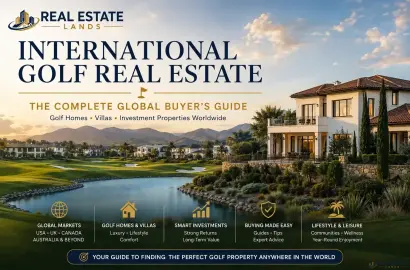

 International Golf Real Estate: The Complete Global Buyer's Guide to Golf Homes, Villas & Investment Properties Worldwide Part 2
 Luxury Real Estate Worldwide | Luxury Homes & Properties
 Golf Real Estate Worldwide | Golf Homes & Properties
 Explore Property Types | Global Real Estate